
Website design that makes your business easier to understand.
For businesses that need a clearer online presence. We connect your message, page structure and visual identity so visitors can understand what you offer and find their next step.
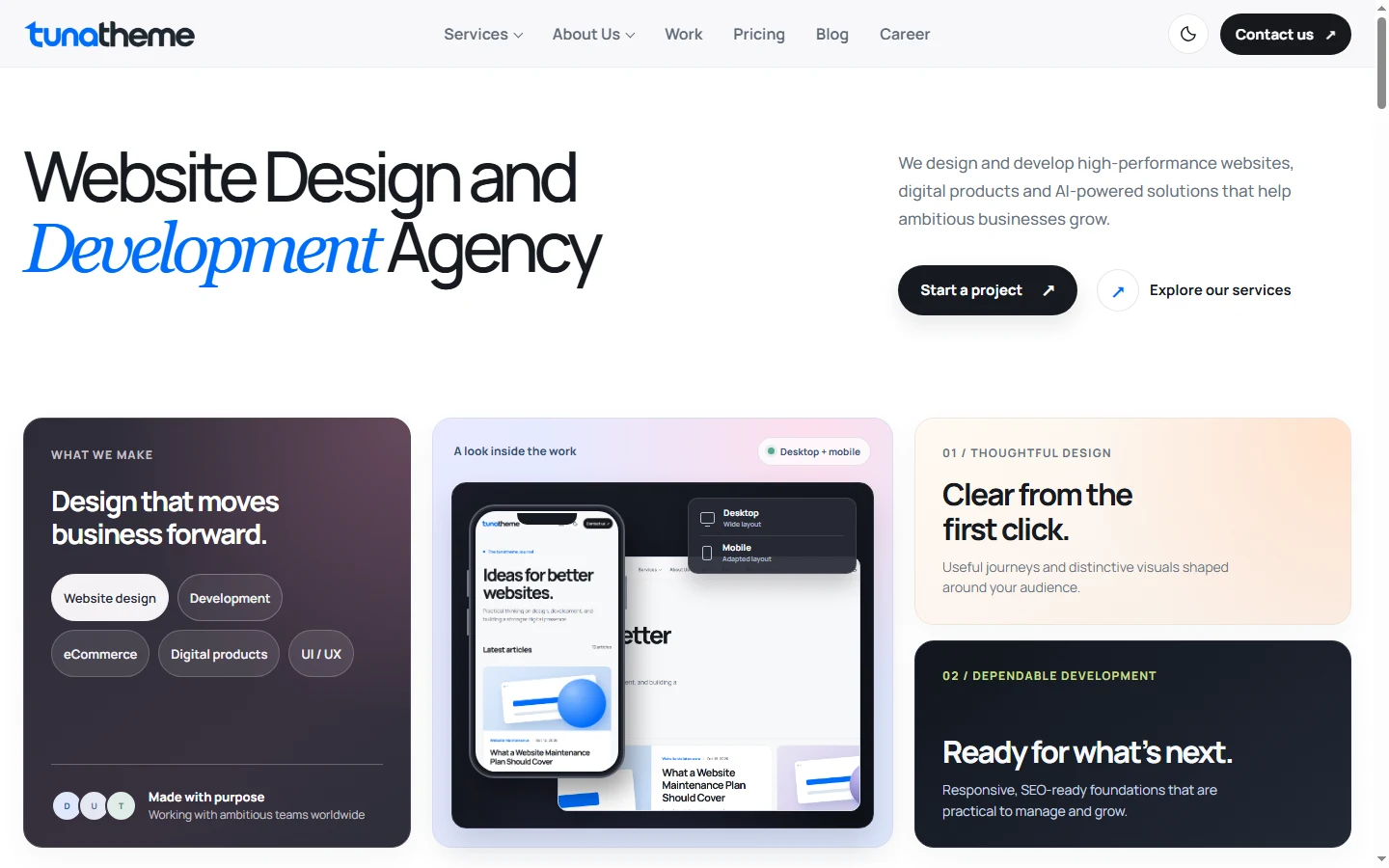
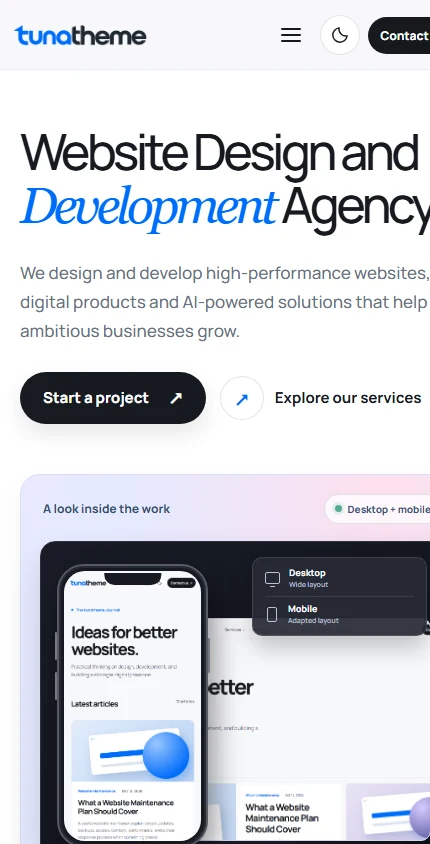
Our own agency site is shown as a first-party design example, not a client outcome.
See the decisions in a working website.
The available published examples are TunaTheme-owned pages. They show how we arrange information and interaction; they are not presented as client case studies.
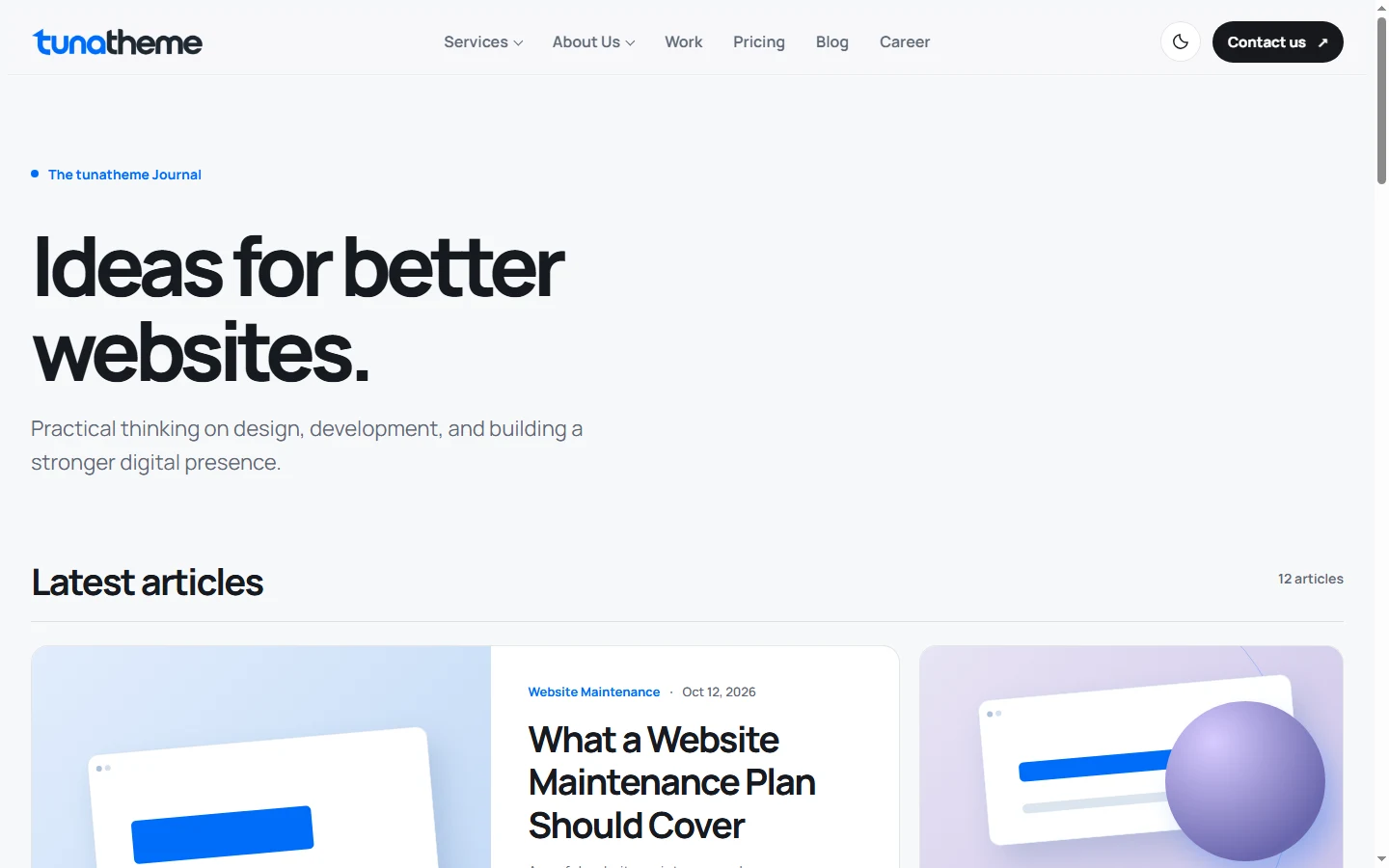
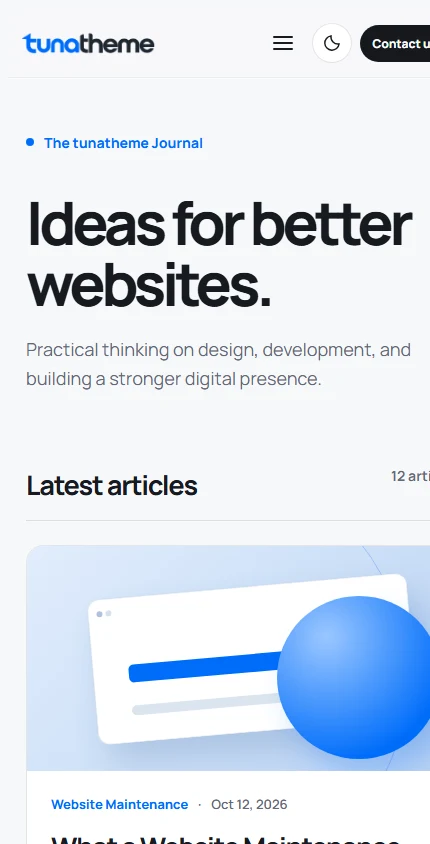
TunaTheme Journal
Context: Our own articles needed a reading experience with clear entry points and comfortable long-form typography.
Our role: Site structure, interface design and implementation for the TunaTheme website.
Design decisions: A strong article hierarchy, visible categories and a layout that supports scanning before reading.
Delivered: The live journal listing and article presentation. Explore the journal ↗
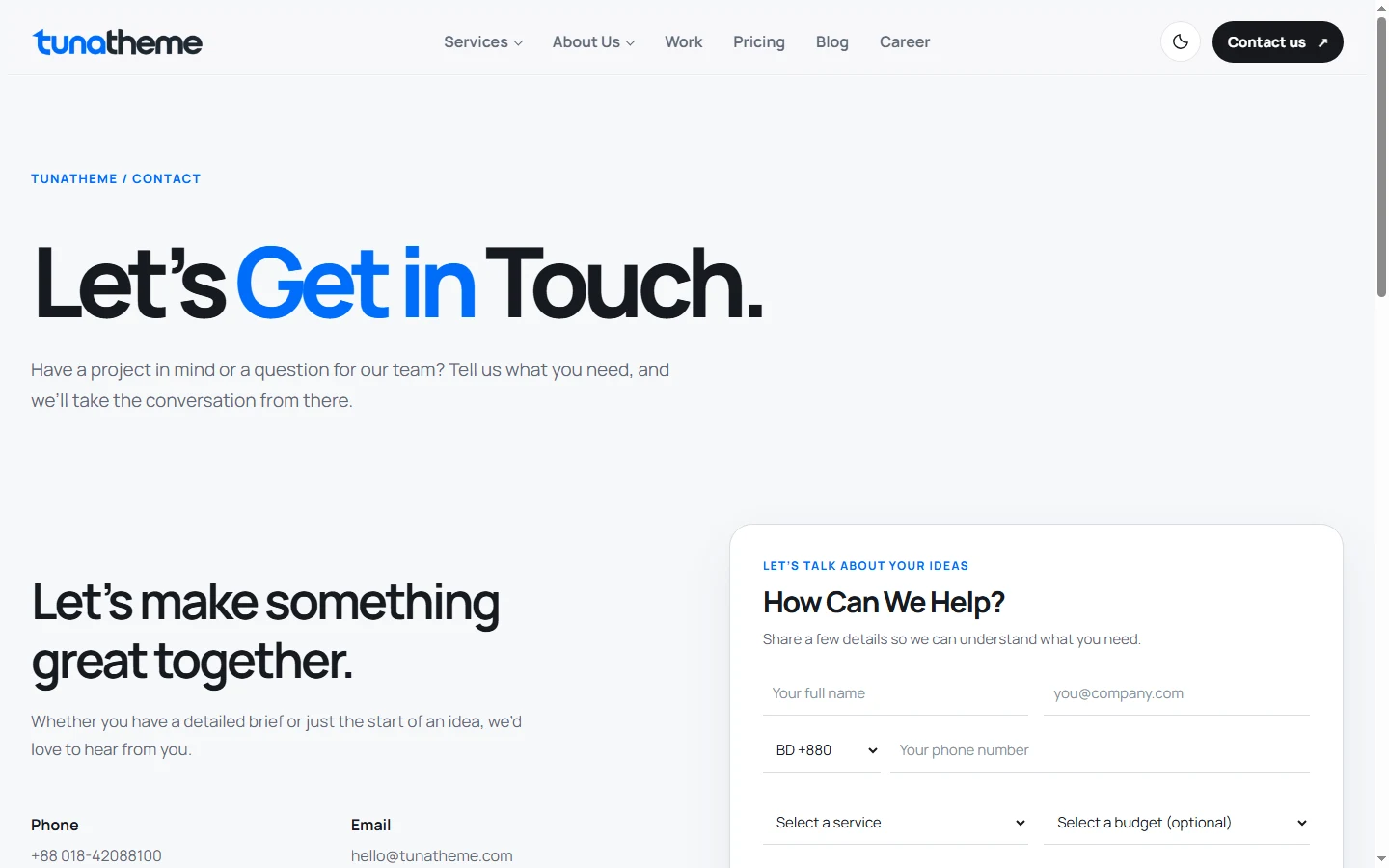
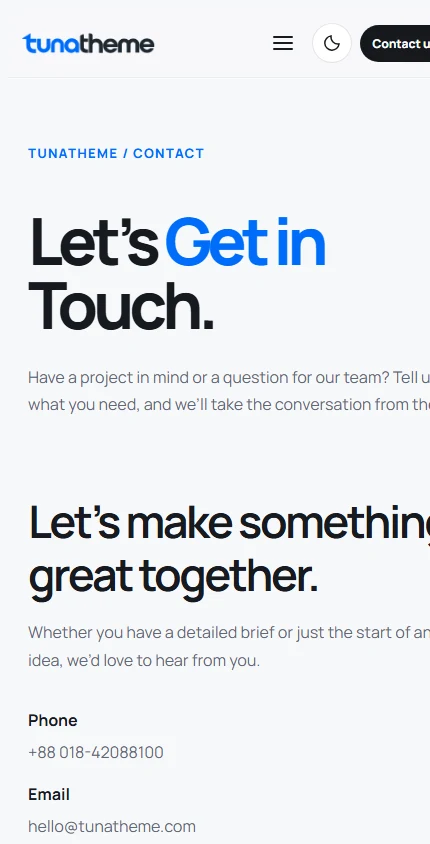
TunaTheme Contact
Context: People contacting us may have either a detailed brief or an early idea.
Our role: We designed and built the contact page and its project inquiry flow for our own site.
Design decisions: Persistent labels, clear required fields and feedback that reflects the actual submission result.
Delivered: A working inquiry form connected to the site’s lead inbox. See the contact page ↗
Every part has a job.
This is an illustrative page anatomy, not a client result. The exact layout changes with the audience and content.
Who it helps, what it changes and where to go next.
- 01
Message
A headline and introduction that make the offer understandable without jargon.
- 02
Proof
Relevant work, process details or verified evidence near the decision it supports.
- 03
Action
A specific next step with enough context for someone to take it confidently.
Eight ways to shape the right website.
These are the existing design services. Your proposal will identify which parts are relevant to your project.
Review the direction before the details.
We make approval points clear in the proposal. A typical design project moves through these decisions.
Brief and audience
We review your offer, audience, content and existing brand material.
Client input: goals, references and available content.Sitemap and wireframes
We plan the pages and the route to key actions before refining the visuals.
Review point: page priorities and content hierarchy.Visual system
Typography, color, imagery and components establish a consistent direction.
Review point: approve the direction and agreed revisions.Responsive layouts
We refine important screens and prepare the agreed design outputs.
Review point: final layouts and next-stage responsibilities.Know what the design quote covers.
The proposal names the pages, templates, review rounds, deliverables and handoff format. These items are discussed rather than silently assumed.
The price follows the scope.
Page and template count, content readiness, functionality, review rounds and handoff needs shape the estimate. We outline the work and cost before you commit. See our pricing approach ↗
Before we begin designing.
Can we commission design only?
Yes. We can scope design as a standalone stage. The handoff files and level of development detail should be agreed up front.
Can TunaTheme develop the design too?
Yes. Development can be planned as part of the same project or as a later stage with its own scope.
How do revisions work?
We define review rounds and approval points in the proposal. Changes beyond the agreed scope are discussed before extra work begins.
Who provides the copy and images?
You can supply them, or we can discuss content and asset creation as a separate part of the scope. Early draft content helps us design realistic layouts.
Will we receive editable design files?
That depends on the agreed deliverables and ownership terms. We specify file format, access and handoff before the project starts.
Is mobile design included?
Responsive behavior is planned with the project. The exact screens and review coverage are set out in the scope.
Tell us what your website needs to say.
Share your business, audience and the pages you have in mind. We will review the brief and reply with a sensible next step.
Tell us about your website design
Share your goals, audience and any existing brand or content.